Father God and Mother Love
Otec Bůh a matka Láska · SPM Media, Prague, 2024 · 349 pages
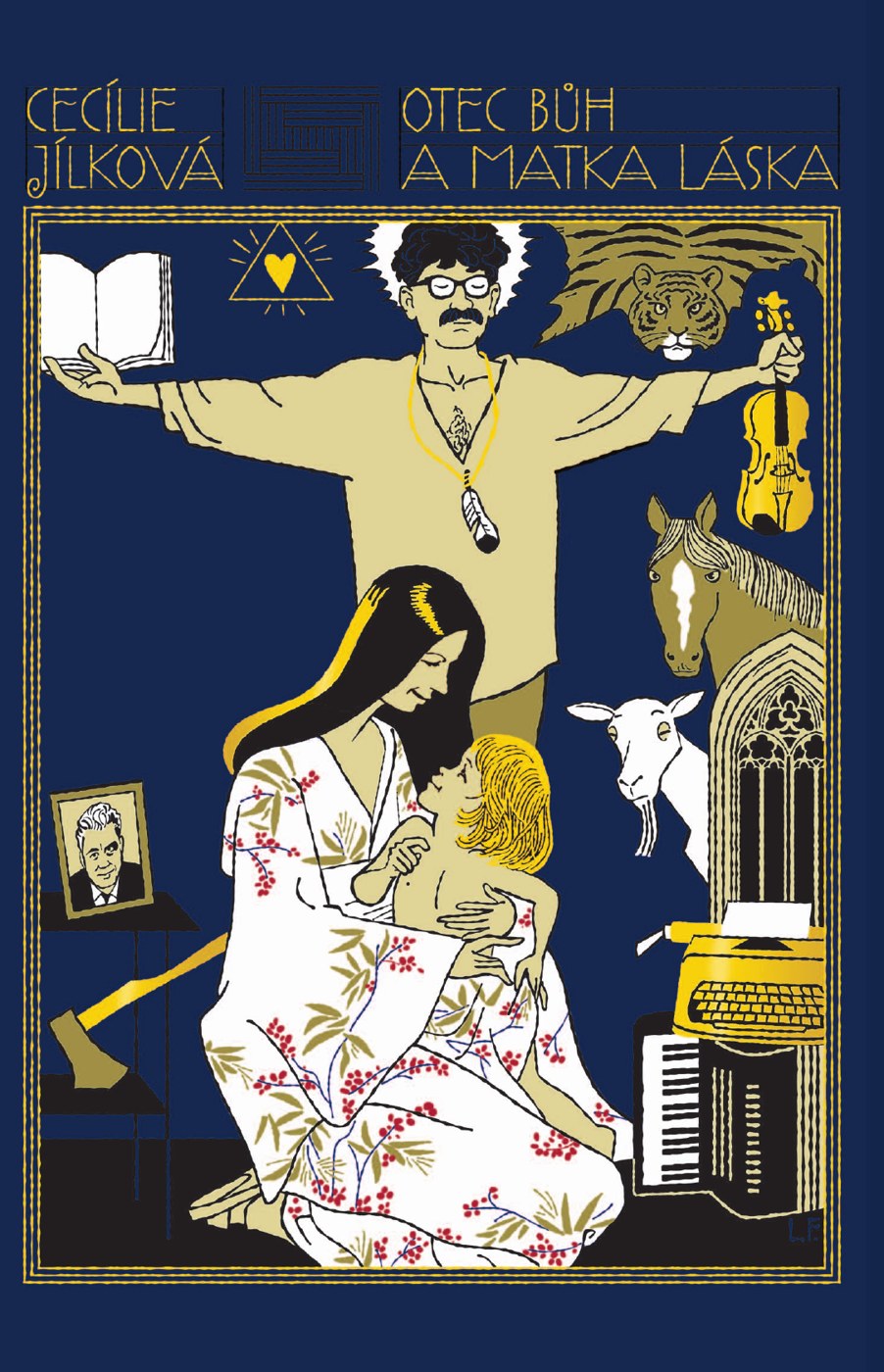
The daughter of two Czech dissidents describes a childhood under communist totalitarian rule and coming of age in the years after the Czechoslovak Velvet Revolution. A story of the lifelong search for love and the longing for self-healing.
What was intended as a simple account of wild youth unexpectedly develops into a gripping story about what shapes us: parenthood, partnerships, friendships, and one’s relationship with oneself.
Czech critical reception
“One of those books that, once you open them, you won’t put down… The reader feels they are reading a narrative, and only gradually realizes the depth of thought beneath it.”Kultura21.cz
Rights: complete English translation by Lenka Holá available; world English and translation rights free.
From the Book
Three excerpts from the English translation by Lenka Holá, with photographs from the family archive.
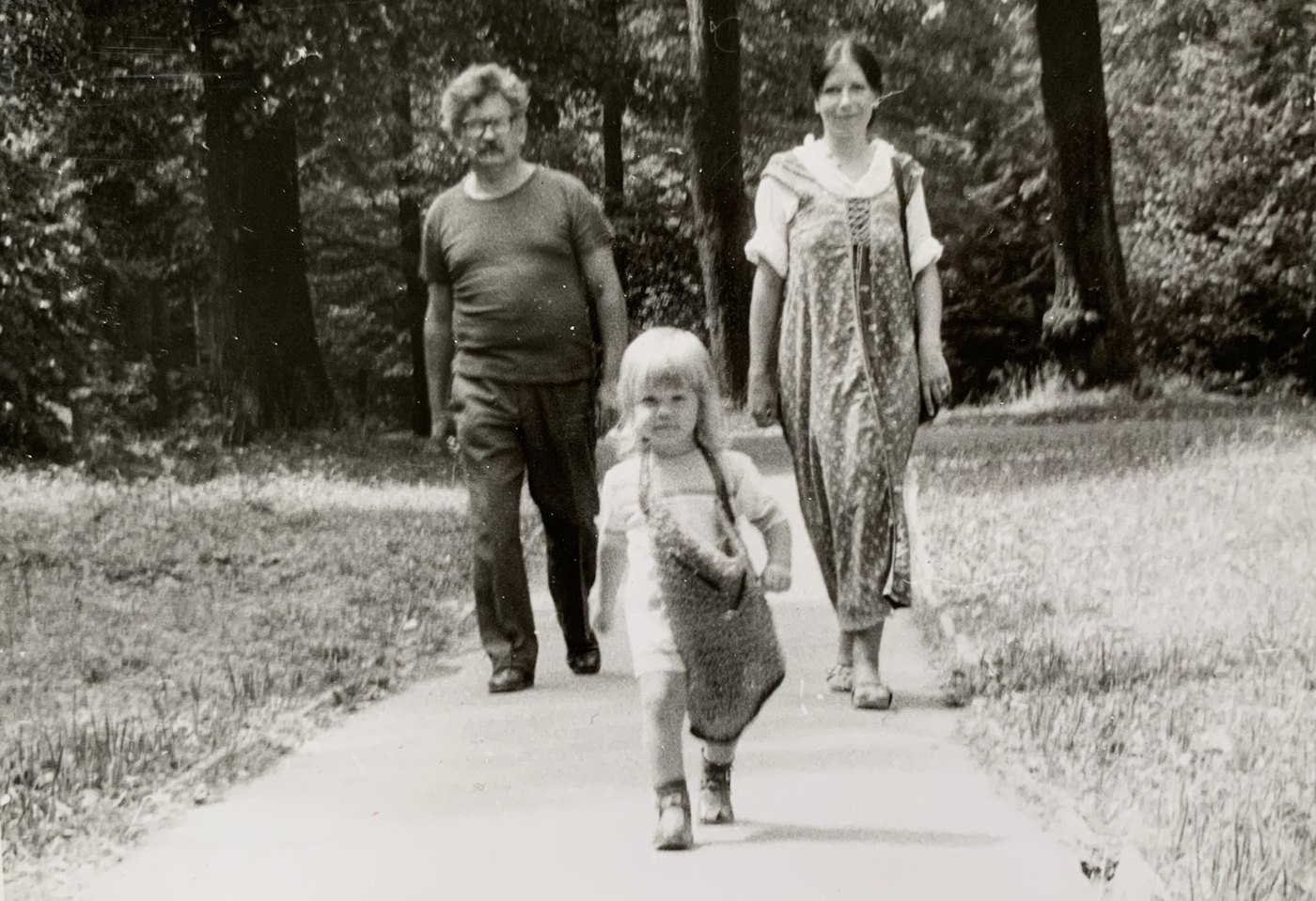
With my parents, early 1980s.
The openingWe are following a path. To the right, there is a field. Frost settles into wisps of fog. Crows are foraging in the black soil. To the left, there is a coat. My left hand is warm, untouched by the cold. My left hand is wrapped in my dad’s hot palm.
…
I sat down on a convenient wall with a view. Cold grass caresses my bare feet. Somewhere out there, among the stars, is the one that’s his. A minor planet, that is—or rather, an asteroid. It got its surname on October 12, 1996, at the Kleť Observatory. Its first name is 10872.
“Well, there you go.”
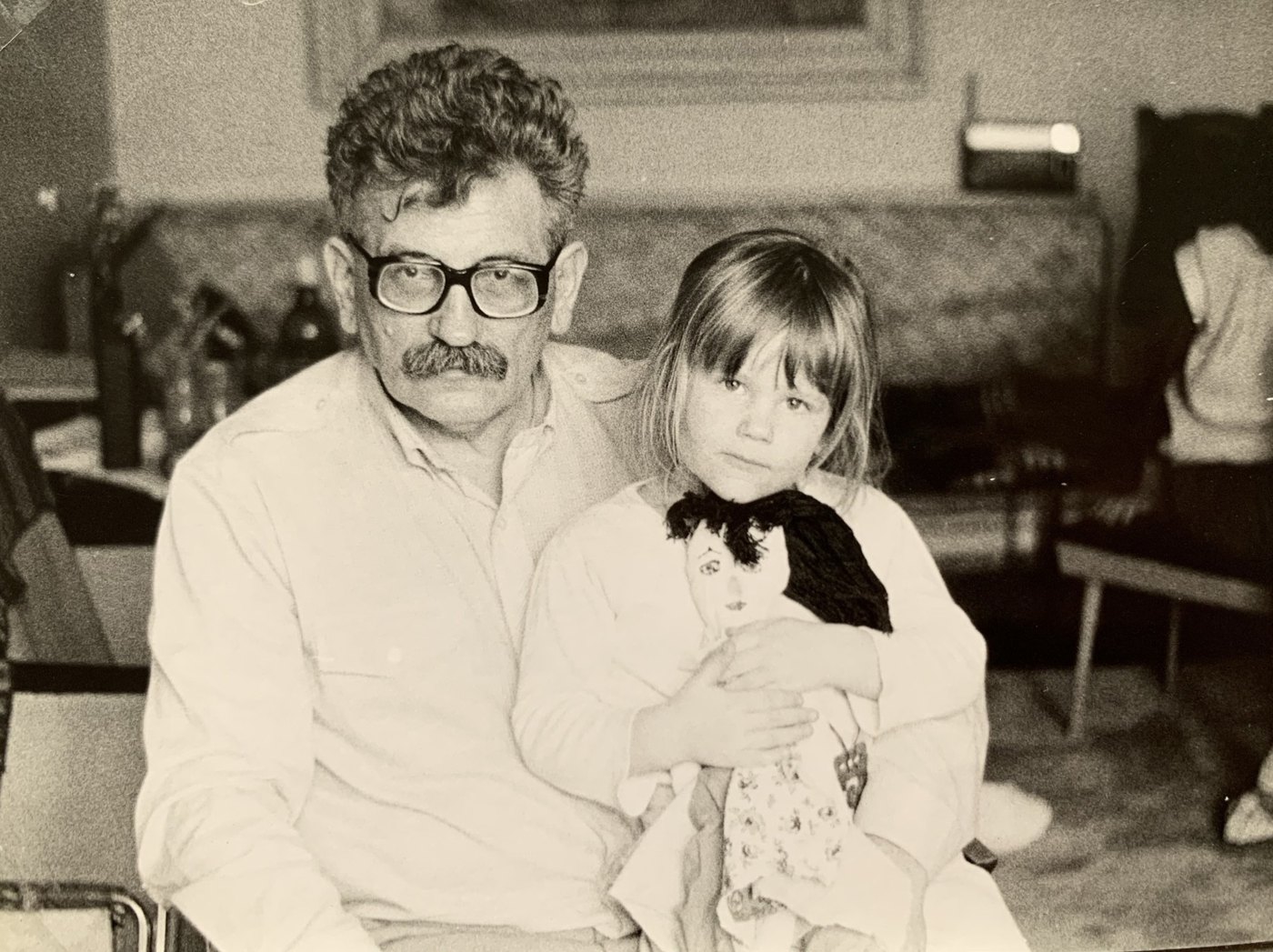
With my dad in the old Lhotka apartment, Prague, 1986.
FatherAnd then he would show his love with hugs, cuddles, kisses. He did all of this more for himself than for us. Being twenty-five years older than my mother, he was the same age as her father, the writer Jan Procházka. He was, in fact, three years older than Procházka. His tenderness was more of a sentimental need than a true act of giving. (Was his tenderness ever an act of giving?) As far as I can remember, he always talked about his death: “I’m already an old man, and I’ll die soon, children.” He would repeat this so often that it ultimately became an annoying cliché. When he did eventually die, no one was really surprised. I am actually thankful he kept saying it. When he died, we just thought: “Well, dad was really old and died. That’s that.” Despite the reservations I had about his parenting style, this was a blessing. Parents should start talking about their deaths in a timely manner. Our dad began shortly after I was born, when he was about fifty-five. In the end, he died more than thirty years later. For thirty years, he never stopped preparing us for his death. Death, sin, and God were his favorite dinner-table topics.
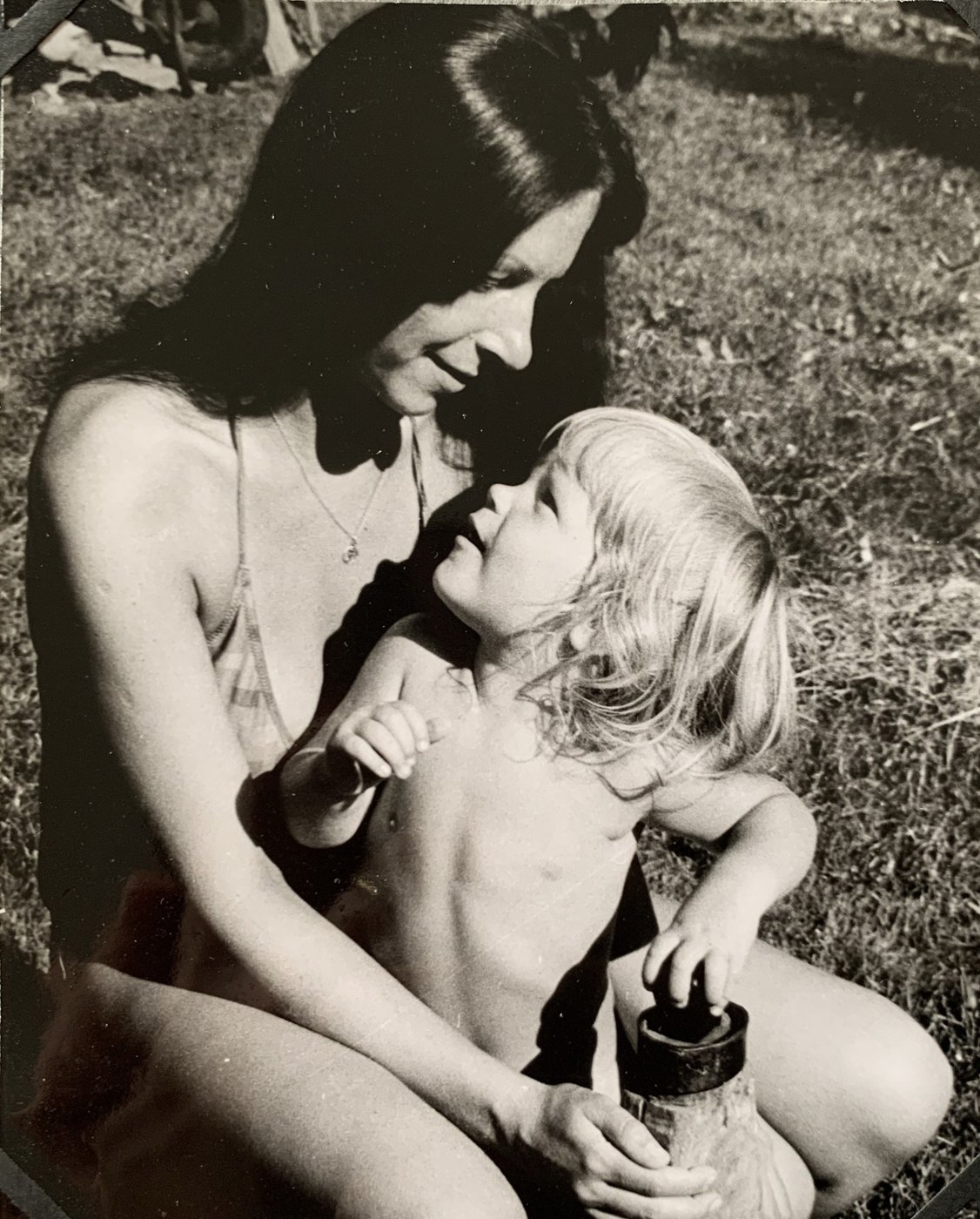
With my mom. Valašská Bystřice, 1983. Photo by Ludvík Vaculík.
Mother · Prague, 1998“Hello, this is Lieutenant Vomáčková. Unfortunately, we found your phone number in the pocket of the deceased.”
“What?”
“We need you to come in for questioning.”
“What happened to him?”
“That’s what we’re trying to figure out, miss. We’re hoping you can tell us.”
“But I don’t know anything! He was still alive when I left!”Mom looks up from the dishes, suddenly alert.
…
Mom walks in. Her face is hard to read.
“Did you kill him?”
“What?”
“You can tell me. I’ll get you out of it.”There are certain moments in life when you can clearly tell that someone loves you. Her question filled me with admiration. I am sure that any other parent would have turned hysterical, showering the kid with reproaches—not only will they likely be accused of murder, but instead of being good and sleeping over at a friend’s house, they were lying and crawling through the filthiest hell-holes Prague has to offer, drinking alcohol and doing who knows what else. Any other parent wouldn’t forget to mention how deeply disappointed and ashamed they were. They would wonder who the child takes after. Without a doubt, that’s exactly how any parent would have reacted—except one.
Book Trailers
Short films made from the family archive, with passages from the book. English subtitles.
About the Book
The story
The first half reads like Christiane F. set in post-revolution Prague: raw, fast, and unsparing. After a childhood in an apartment under permanent secret-police surveillance, where the guests bore the scars of prisons, camps, and uranium mines, comes adolescence in the euphoria of the Velvet Revolution; we live through the nineties, when Prague became a hub of the European drug trade and society was getting used to a freedom nobody had prepared it for.
The second half turns inward: a marriage destroyed by alcoholism, a premature birth and a child’s life in danger, a violent relationship, a lived confirmation of Gabor Maté’s thesis that childhood trauma breeds not only addiction but toxic attachment, and the death of her father. Readers of The Glass Castle will recognize the territory. And the book’s radical honesty is inherited: Jílková writes about her father with the same merciless candour that made his Czech Dreambook a classic of European literature.
Father God, Mother Love: the meaning of the title
The title names the book’s two spiritual poles, embodied by the author’s parents. Her mother lived by Masaryk’s creed: those who discipline themselves receive the support of the absolute. Her father leaned toward the Catholic promise that we need not carry our sins alone; they will be forgiven. Between these two answers to God, the book arrives at its own definition of love: not addiction, not obsession, not a claim to possess another person. Real love is tolerant and gives freedom, and God and love, Jílková concludes, are one and the same.
Why now
Jílková frames her family’s story as a warning. She returned to political writing when totalitarian methods returned: EU control of social media, attacks on encrypted privacy. Power, she argues, has immutable laws of evolution, whoever exercises it. She is also a prominent critic of age verification and Chat Control, warning that a childhood under Big Brother’s surveillance can itself cause trauma. The book speaks directly to the present free-speech debate, and to a society of addictions, offering a map of the roots: lost meaning (Frankl) and childhood wounds (Maté), and a way back through love and personal responsibility.